How Sleep Apnea Affects Your Dental Health: The Connection Most Patients Miss
Posted on 11/26/2026 by Singing River Dentistry - Athens |
 The relationship between sleep apnea and dental health is closer than most patients realize, and your dentist is often the first healthcare provider to notice the warning signs. The mouth, jaw, and airway share anatomy that puts the dental team in a unique position to catch the early clues, often before a patient or their primary care doctor has connected the dots.
At Singing River Dentistry in Athens, AL, we see this scenario regularly. A patient comes in for a routine cleaning, and a pattern of tooth wear, jaw tension, or tongue indentations prompts a conversation that ends with a referral for a sleep study. This article walks through how sleep apnea affects your teeth and gums, the specific signs we look for during a dental exam, and what your dental team can do as part of a broader care plan.
On This Page
Why the Dentist Often Spots Sleep Apnea First
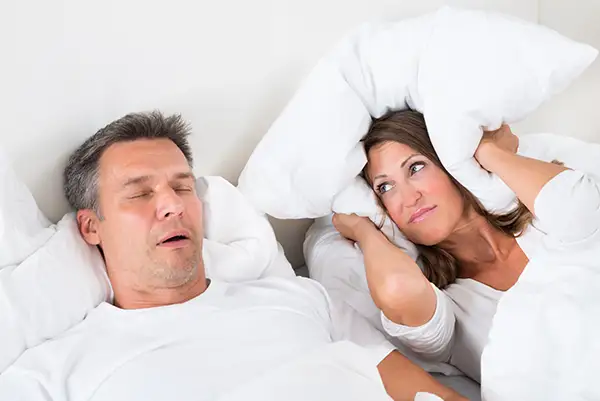
Obstructive sleep apnea is a condition in which the upper airway repeatedly narrows or collapses during sleep, briefly interrupting breathing. Many people who have it don’t know it. The events happen while they’re asleep, and the most obvious symptoms (snoring and breathing pauses) are usually noticed by a bed partner first, if anyone notices at all.
Dentists see twice-a-year snapshots of the mouth, jaw, and throat that other clinicians don’t typically examine. That positions us to catch the structural and wear-pattern clues that point toward an airway problem, even when the patient has never mentioned snoring or fatigue. Catching it early matters because untreated obstructive sleep apnea is associated with significant whole-body health consequences down the line.
How Sleep Apnea Affects Your Dental Health
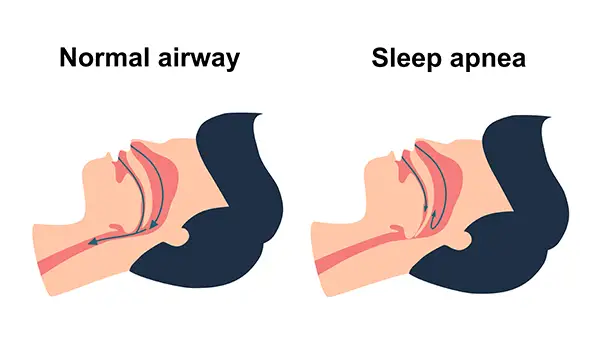 The connection works in both directions: dental issues can hint at sleep apnea, and untreated sleep apnea can damage the teeth and gums in several specific ways. The five patterns below come up most often in our exams.
Bruxism (nighttime teeth grinding)
Research has consistently linked obstructive sleep apnea with nighttime grinding. One leading theory is that the grinding is actually a protective reflex, jolting the lower jaw forward to reopen a collapsing airway. Whatever the exact mechanism, the result is visible: flattened tooth surfaces, cracks, fractures, and morning jaw soreness. We address this through teeth grinding treatment tailored to the cause, not just the symptoms.
Dry mouth and elevated cavity risk
Many people with sleep apnea breathe through their mouth at night, which dramatically reduces overnight saliva flow. Saliva is the mouth’s natural defense against decay, so chronic mouth-breathing tilts the balance toward cavities, gum irritation, and persistent bad breath that doesn’t respond to brushing alone.
Gum disease
Studies have documented higher rates of periodontal disease in patients with obstructive sleep apnea. The drivers appear to be a combination of dry mouth, systemic inflammation, and possibly shared inflammatory pathways between the two conditions.
TMJ dysfunction
The jaw stress from nighttime grinding, combined with compensatory jaw posturing during airway events, contributes to disorders of the temporomandibular joint. Clicking, locking, and persistent jaw soreness often accompany untreated sleep apnea, and our TMJ treatment options address both the symptoms and the underlying mechanics.
Tongue scalloping
When the tongue presses against the teeth during airway compensation, it can develop visible scalloped indentations along its edges. It’s painless and easy to overlook, but it’s one of the clearer mouth-level signals that something is happening at night.
Dental Signs We Look For at Routine Exams
During a routine exam, several findings raise our suspicion for an airway issue and prompt a conversation about a sleep evaluation.
| • |
Extensive tooth wear – especially flattened molars and worn front edges that don’t match the patient’s age
|
| • |
Tongue scalloping – the wavy indentations along the sides of the tongue
|
| • |
Inflammation at the back of the throat – often from chronic snoring vibration
|
| • |
A narrow palate or low-set tongue – anatomy that crowds the airway and predisposes someone to obstruction
|
| • |
Recurrent cavities along the gumline – a common pattern in chronic mouth-breathers
|
| • |
Patient reports of dry mouth on waking, morning headaches, or jaw soreness – classic morning-after sleep apnea symptoms |
No single sign confirms sleep apnea on its own; only a sleep study can do that. But when several of these clues cluster together, that’s the cue for us to raise the topic and coordinate with the patient’s physician.
How the Dental Team Helps with Sleep Apnea
The dental team isn’t a substitute for a sleep physician, but we play a meaningful role in identifying and managing the condition once it’s diagnosed.
Identifying and referring
At routine exams, we may raise concern based on the dental signs above and recommend a sleep study with a physician. The diagnosis itself is made by the sleep doctor, not by us, but our flag is often what starts the process.
Oral appliance therapy
For mild to moderate obstructive sleep apnea, or for patients who can’t tolerate CPAP, a custom-fitted oral appliance worn at night gently repositions the lower jaw slightly forward to keep the airway open. These devices look similar to a mouthguard, are far more portable than CPAP, and work well for appropriately selected patients. Our sleep apnea service walks through whether an oral appliance is a fit for your case.
Working alongside sleep medicine
For severe sleep apnea, CPAP or surgical options usually remain first-line, and our role becomes supportive. We coordinate with your sleep physician rather than replace them, and we make sure any dental side effects of the chosen therapy are managed.
Protecting against grinding damage
When grinding is part of the picture, a custom night mouth guard protects your teeth from the wear and pressure of nocturnal clenching. This is often combined with sleep apnea therapy when both issues are present.
Why This Matters Beyond Your Mouth
Untreated sleep apnea isn’t just a comfort or relationship issue. Long-term, it’s associated with elevated cardiovascular risk, including high blood pressure, stroke, and heart rhythm disorders. It also contributes to daytime cognitive impairment, drowsy-driving accidents, and increased overall mortality.
The dental connection isn’t a footnote. Your mouth offers a window into a condition with significant systemic implications, and the dental team is well-positioned to see through that window.
Talking to Your Dental Team
If a partner has noted snoring or pauses in your breathing, if your dentist has flagged wear patterns or tongue scalloping, or if morning headaches and daytime fatigue are persistent, raising the topic at your next visit is worth doing. The Athens team at Singing River Dentistry can evaluate the dental signs, coordinate with your physician if needed, and discuss whether oral appliance therapy might fit your situation. Call us at 256-867-0090 or learn more about our Athens dental practice to start the conversation.
Frequently Asked Questions
Can a dentist diagnose sleep apnea?
No. A formal diagnosis requires a sleep study interpreted by a physician, typically a sleep medicine specialist. What dentists can do is identify the dental and oral signs that suggest sleep apnea may be present and recommend that you pursue a sleep evaluation.
Is an oral appliance as effective as CPAP?
For mild to moderate obstructive sleep apnea, oral appliances are widely recognized as effective and are often the preferred option for patients who can’t tolerate CPAP. For severe sleep apnea, CPAP generally remains the gold standard. The right choice depends on the severity of the condition and personal factors that your sleep physician and dental team can help you weigh.
How do I know if I’m grinding my teeth at night?
Common clues include waking with a sore jaw or dull headache, sensitivity in the back teeth, a partner reporting grinding sounds, and visible flattening or chipping of the tooth surfaces. Our team can confirm these patterns at a routine exam and discuss protective options.
Does sleep apnea cause cavities?
Not directly, but it raises the risk substantially. Mouth-breathing during sleep dries out the mouth and reduces the protective effect of saliva, creating an environment where bacteria thrive and decay accelerates, especially along the gumline.
Can children have sleep apnea, and would the dentist notice?
Yes. Children can have obstructive sleep apnea, often related to enlarged tonsils, adenoids, or airway development. Dental signs in children can include mouth-breathing, a narrow palate, crowded teeth, and unusual wear patterns. If we notice these clues, we’ll discuss next steps with the family, which may include referral to a pediatric ENT or sleep specialist. |
|